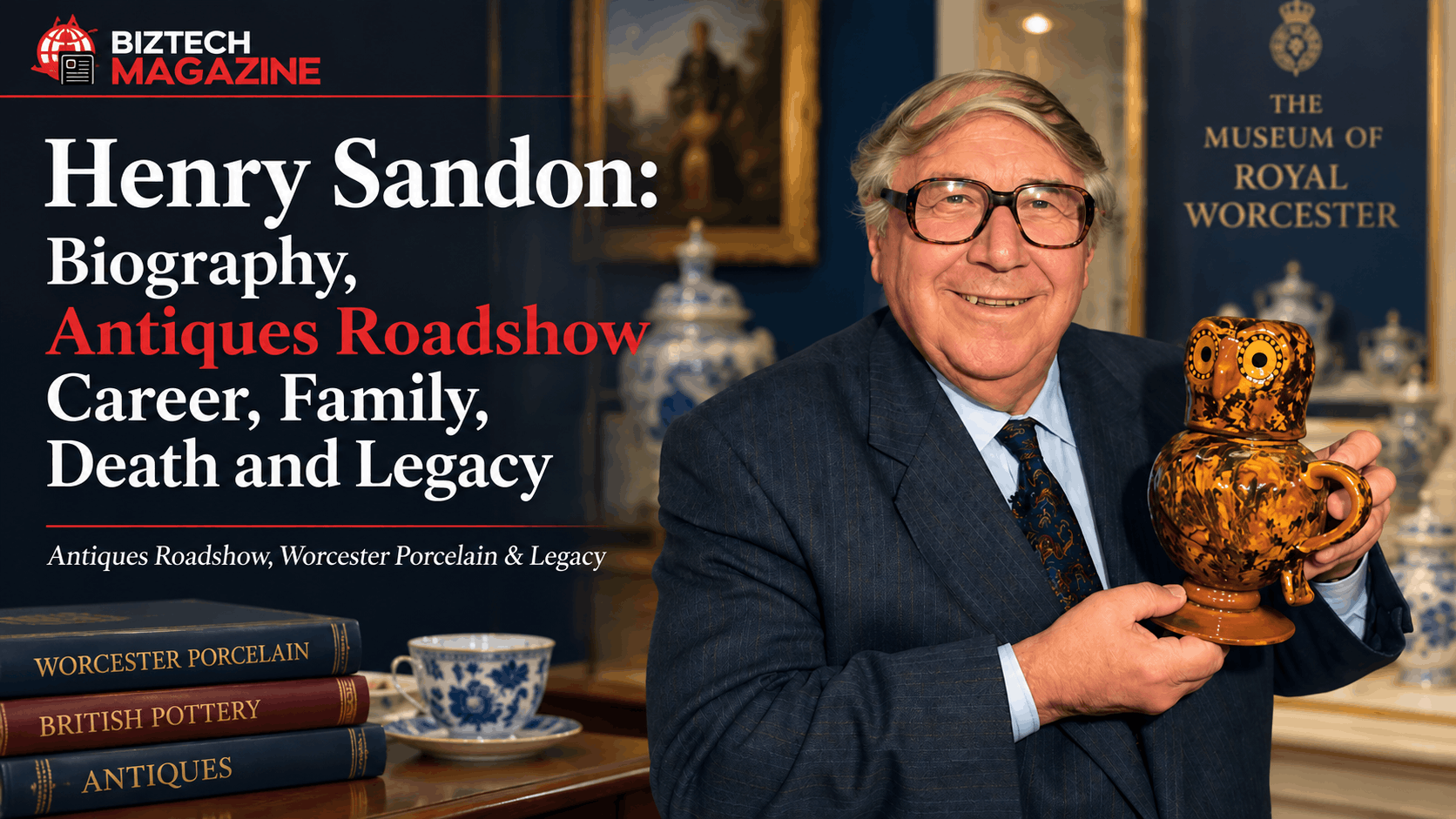
Henry Sandon was a British antiques expert and ceramics specialist. He became famous through BBC Antiques Roadshow. His main expertise was Worcester porcelain and British ceramics. Sandon also worked as a museum curator, author, lecturer, and broadcaster.
He served at the Dyson Perrins Museum in Worcester for 16 years. His archaeological research helped explain Worcester’s early porcelain history. He joined Antiques Roadshow in 1979 and became a familiar television figure. His famous discoveries included the valuable Ozzie the Owl. Henry Sandon received an MBE in 2008 for his contributions. He died aged 95 on 25 December 2023. His son, John Sandon, also became a ceramics expert.
Quick Bio
| Detail | Information |
|---|---|
| Full Name | Henry George Sandon |
| Birth Name | Henry George Sandoni |
| Date of Birth | 10 August 1928 |
| Birthplace | East End, London, England |
| Nationality | British |
| Profession | Antiques expert, curator, author and broadcaster |
| Speciality | Ceramics, pottery and porcelain |
| Main Expertise | Worcester porcelain |
| Famous For | BBC Antiques Roadshow |
| Museum Role | Curator of the Dyson Perrins Museum |
| Curatorship | 1967 to 1983 |
| Famous Discovery | Ozzie the Owl |
| Ozzie Valuation | Around £20,000 |
| Honour | MBE, awarded in 2008 |
| Wife | Barbara Sophia Starkey |
| Children | David, Peter and John Sandon |
| Famous Son | John Sandon |
| Date of Death | 25 December 2023 |
| Age at Death | 95 |
| Place of Death | Malvern, Worcestershire |
| Known Legacy | Worcester porcelain research and television education |
Who Was Henry Sandon?
Henry Sandon was a respected British ceramics and antiques expert. He became especially known for Worcester porcelain and pottery. His career combined museum work, archaeology, television and academic research. Sandon served as curator of the Dyson Perrins Museum.
He also became a long-serving expert on BBC Antiques Roadshow. His friendly style helped viewers understand historical ceramics more easily. Beyond television, he wrote important reference books about British porcelain. His research also helped preserve Worcester’s industrial and ceramic heritage. Sandon later received an MBE for his contributions to broadcasting, ceramics and charity.
Henry Sandon Early Life and Education
Henry Sandon was born on 10 August 1928 in London’s East End. His birth name was Henry George Sandoni. His father worked with dogs for cinema productions. This gave Sandon an unusual childhood around the British film industry.
He later attended the Royal Grammar School, High Wycombe. Sandon also developed a strong interest in classical music. He eventually received musical training at the Guildhall School of Music. His early education therefore combined traditional schooling with artistic development.
Henry Sandon’s Early Interest in Music
Music became an important part of Sandon’s early professional life. He was a classically trained singer with a deep voice. He later moved to Worcester in 1953 for teaching work. He taught at the local grammar school and sang professionally.
Sandon also became a lay clerk in Worcester Cathedral’s choir. This musical career eventually introduced him to Worcester’s rich cultural history. His later interest in ceramics developed alongside this connection.
How Henry Sandon Became a Ceramics Expert
Henry Sandon’s career changed after discovering pottery through archaeology. While living in Worcester, he found ancient pottery fragments while digging. Some discoveries dated from Roman and medieval periods.
These finds encouraged him to study local archaeological history. He gradually developed a deeper interest in pottery and porcelain. Worcester’s historic porcelain industry became his main specialist subject. His archaeological work later supported his museum career and research.
Henry Sandon’s Interest in Worcester Pottery
Worcester offered Sandon an important link between archaeology and porcelain. He studied pottery fragments alongside surviving historical records. This approach helped him understand early manufacturing methods and ceramic development. His research eventually focused strongly on Worcester porcelain. That specialist knowledge established his reputation among collectors and museums.
Henry Sandon and Royal Worcester
Henry Sandon became closely associated with Worcester’s historic porcelain industry. He served as curator of the Dyson Perrins Museum from 1967 to 1983. The museum later became part of the Museum of Royal Worcester.
During this period, Sandon researched Worcester porcelain and its manufacturing history. He also supported archaeological investigations at important factory sites. His work included research around Warmstry House, linked with early Worcester porcelain production. Sandon helped identify, document and preserve significant ceramic evidence. His museum career established him as a leading Worcester porcelain authority.
Henry Sandon’s Contribution to Worcester Porcelain Research
Sandon combined archaeological evidence with historical ceramic research. He examined production sites, porcelain objects and manufacturing records. This helped improve understanding of Worcester’s early porcelain industry. He also helped secure important objects for the museum collection. These included the Wigornia cream jug and Sarah Siddons Plate. His research became valuable for collectors, historians and ceramic specialists. Sandon’s work remains an important part of Worcester’s ceramic heritage.
Henry Sandon on Antiques Roadshow
Henry Sandon became a familiar face on BBC Antiques Roadshow. He joined the programme in 1979 as a ceramics expert. His specialist knowledge covered pottery, porcelain and historical ceramics. Sandon could explain complex ceramic details using simple language. His enthusiasm also made antique discoveries engaging for television audiences. He became known for his warm personality and distinctive laugh. His long television career helped popularise British ceramics among general viewers. Antiques Roadshow also strengthened his public reputation as an expert.
Henry Sandon and Ozzie the Owl
Ozzie the Owl became one of Henry Sandon’s best-known television discoveries. The ceramic owl appeared on Antiques Roadshow in Northampton. Sandon recognised it as a rare Staffordshire slipware owl jug. He valued the unusual piece at around £20,000. The discovery became a memorable moment in the programme’s history. It also demonstrated Sandon’s ability to recognise important historical ceramics. The owl remains strongly associated with his television legacy.
Henry Sandon’s Books and Publications
Henry Sandon also built a strong reputation as a ceramics author. His books covered Worcester porcelain, British pottery and antique collecting. He wrote reference material for collectors and ceramic enthusiasts. His publications reflected decades of research into historical porcelain. Several works focused specifically on Worcester’s important ceramic manufacturers. His writing helped preserve specialist knowledge for future generations.
Notable Henry Sandon Books
Some publications associated with Henry Sandon include:
- The Illustrated Guide to Worcester Porcelain 1751–1793
- Royal Worcester Porcelain 1862 to the Present Day
- British Pottery and Porcelain for Pleasure and Investment
- Coffee Pots and Teapots for the Collector
- Flight and Barr Worcester Porcelain 1783–1840
- Grainger’s Worcester Porcelain
These publications strengthened his position within the ceramics collecting community.
Henry Sandon Wife and Children
Henry Sandon married Barbara Sophia Starkey in 1956. The couple remained together for many decades. Barbara died in January 2013 after their long marriage. They had three sons named David, Peter and John. All three children were born during the family’s life in Britain. David and Peter predeceased their father. John later became a prominent ceramics and antiques specialist himself.
Who Was Henry Sandon’s Son John Sandon?
John Sandon followed his father’s professional path in ceramics. He developed specialist knowledge of porcelain and antique ceramics. John also became a familiar expert on BBC Antiques Roadshow. His career included specialist work with major auction houses. He has also written books about porcelain and ceramic collecting. John’s career continued the Sandon family’s connection with British ceramics. His work also maintained links with the Museum of Royal Worcester.
Henry Sandon’s Awards and Recognition
Henry Sandon received important recognition for his contribution to ceramics. In 2000, he was named Antiques Personality of the Year. The award came through readers of BBC Homes & Antiques magazine. Sandon later received an MBE in 2008. The honour recognised his services to broadcasting, ceramics and charity. His achievements reflected several decades of public and professional work. His reputation extended across museums, television, publishing and ceramic research.
Henry Sandon’s Private Collection and Net Worth
Henry Sandon was also a serious collector of historical ceramics. His private study collection contained more than 1,000 ceramic objects. The collection represented a wide range of periods and ceramic traditions. Chorley’s later offered the collection through a dedicated auction. The sale achieved approximately £106,000 in total. However, this auction value does not establish Sandon’s personal net worth. His exact wealth was never publicly disclosed. His income came from television, writing, lecturing, museum work and ceramics expertise.
What Was Henry Sandon’s Net Worth?
There is no verified public figure for Henry Sandon’s net worth. Online estimates should therefore be treated with caution. His collection value cannot represent his complete personal wealth. Auction proceeds only show what selected possessions achieved at sale. A reliable biography should avoid presenting an unsupported net-worth estimate as fact.
Henry Sandon’s Health, Death and Obituary
Henry Sandon died peacefully on 25 December 2023, aged 95. He died at a care home in Malvern, Worcestershire. Reports stated that he had suffered a stroke before his death. His family had confirmed his passing and later tributes followed. The Museum of Royal Worcester also recognised his contribution to ceramics. His death marked the loss of an important British porcelain expert.
When Did Henry Sandon Die?
Henry Sandon died on Christmas Day in 2023. He was 95 years old at the time. His final years were spent in Worcestershire, close to his lifelong interests. His death was reported by major British media organisations. Tributes highlighted his long contribution to ceramics and television.
Henry Sandon Obituary and Tributes
Following his death, the antiques community remembered Sandon’s warmth and enthusiasm. His distinctive personality made ceramics approachable for television audiences. The Museum of Royal Worcester published a dedicated tribute to him. Other obituaries highlighted his museum research and broadcasting career. His legacy remains closely connected with Worcester porcelain and Antiques Roadshow.
Henry Sandon’s Legacy in Ceramics
Henry Sandon’s legacy extends beyond his television appearances. His archaeological research helped improve knowledge of Worcester’s porcelain industry. His museum work preserved important ceramic objects and historical evidence. His books created useful references for collectors and researchers. Television introduced his specialist knowledge to a much wider audience. His son John also continued the family’s ceramics tradition. Together, these contributions helped establish the Sandon name within British ceramic history.
Henry Sandon remains remembered for making ceramics accessible and engaging. His work connected museums, archaeology, collecting and television. Worcester porcelain remains central to his professional legacy. His influence continues through published research and museum collections.
Frequently Asked Questions
Who was Henry Sandon?
Henry Sandon was a British ceramics expert, curator and television personality. He specialised in Worcester porcelain and British pottery. He became widely known through BBC Antiques Roadshow. His career also included museum research, archaeology and ceramic publishing.
When was Henry Sandon born?
Henry Sandon was born on 10 August 1928. He was born in London’s East End. His birth name was Henry George Sandoni.
What was Henry Sandon famous for?
Henry Sandon was famous for his Worcester porcelain expertise. He was also known for BBC Antiques Roadshow. His television work introduced ceramics to millions of viewers. Ozzie the Owl became one of his memorable discoveries.
What did Henry Sandon do before Antiques Roadshow?
Before television, Sandon worked as a teacher and singer. He moved to Worcester in 1953 for teaching work. He later became a museum curator and ceramic researcher. His archaeological discoveries helped develop his specialist knowledge.
What was Henry Sandon’s role at the Museum of Royal Worcester?
Sandon served as curator of the Dyson Perrins Museum. He held this position from 1967 until 1983. The museum later became the Museum of Royal Worcester. His work focused strongly on Worcester’s ceramic history.
Who was Henry Sandon’s son?
Henry Sandon’s son was John Sandon. John became a ceramics expert and antiques specialist. He also appeared on BBC Antiques Roadshow. His career continued the family’s long connection with British ceramics.
Was Henry Sandon married?
Yes, Henry Sandon married Barbara Sophia Starkey in 1956. They had three sons named David, Peter and John. Barbara died in January 2013.
How old was Henry Sandon when he died?
Henry Sandon was 95 years old when he died. He died on 25 December 2023. His death occurred in Malvern, Worcestershire.
What was Henry Sandon’s net worth?
Henry Sandon’s exact net worth was never publicly confirmed. His private study collection later sold for approximately £106,000. This auction value does not represent his total personal wealth.
What was Ozzie the Owl?
Ozzie the Owl was a rare Staffordshire slipware owl jug. Sandon identified the unusual ceramic object on Antiques Roadshow. He valued it at around £20,000. The discovery became one of his best-known television moments.









Post Comment