List of Snooker Commentators – BBC, Eurosport & ITV Experts
A detailed guide to UK and European snooker commentators, covering broadcasters, legendary voices, modern analysts, commentary styles, and their impact on professional snooker broadcasting.

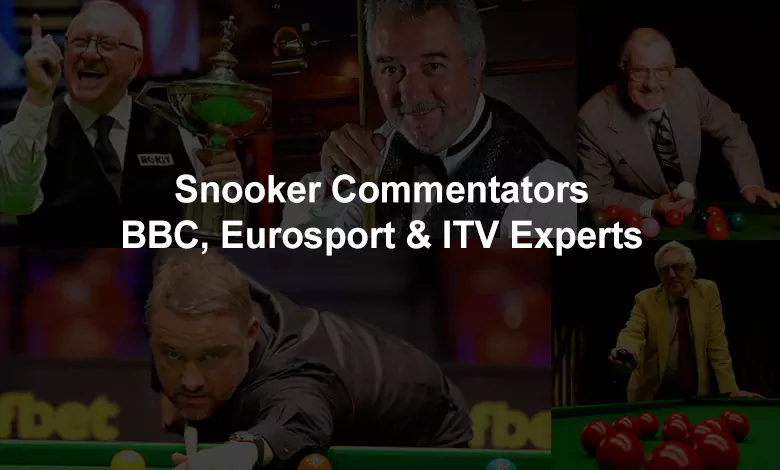
Snooker commentators explain match action, strategy, and pressure moments for television audiences. Their role connects technical snooker play with viewer understanding and emotional engagement. UK and European broadcasts rely heavily on expert-led snooker commentary models.
Commentary accuracy matters because snooker involves complex shot selection and positional planning. Effective commentators describe tactics, frame momentum, and psychological shifts during matches. Modern snooker commentary is dominated by former professional players and specialist broadcasters.
Their experience improves credibility, tactical explanation, and trust among serious snooker viewers. Three broadcasters shape this ecosystem BBC, Eurosport, and ITV. Each network applies a distinct commentary tone, pacing, and analytical depth.
This article analyzes all major snooker commentators using broadcaster-wise structured coverage. The focus remains informational, neutral, and optimized for search intent and topical authority.
BBC Snooker Commentators
BBC snooker commentators define traditional televised snooker coverage in the UK. The BBC established snooker as a mainstream television sport. Its commentary style prioritizes clarity, restraint, and authoritative explanation. BBC broadcasts focus on World Snooker Championship and major ranking events.
Commentators balance silence with precise tactical description. Former world champions and veteran broadcasters form the core BBC team. This structure supports both casual viewers and advanced snooker audiences. BBC commentary emphasizes match context, player psychology, and technical accuracy.
Ted Lowe
Ted Lowe was the most influential snooker commentator in British television history. He became synonymous with BBC snooker coverage during its formative years. His calm delivery earned him the nickname “Whispering Ted.” Lowe adapted commentary to snooker’s quiet, tension-driven environment. He focused on descriptive accuracy rather than excessive analysis.
His style allowed viewers to absorb shot selection naturally. Ted Lowe shaped audience expectations for respectful snooker broadcasting. Modern BBC commentary still reflects his restrained delivery principles.
Clive Everton
Clive Everton combined snooker commentary with deep journalistic authority. He worked as a BBC commentator, author, and snooker historian. Everton provided contextual depth beyond frame-by-frame description. His commentary included historical references and rule clarification.
He enhanced audience understanding of snooker’s professional structure. Everton’s analytical tone appealed to knowledgeable snooker followers. His influence extended beyond broadcasting into snooker governance commentary. He remains a benchmark for intellectual snooker analysis.
John Virgo
John Virgo is one of the most recognizable BBC snooker commentators. He transitioned from professional snooker into full-time broadcasting. Virgo combines energetic delivery with accessible tactical explanation. His commentary highlights shot difficulty and positional risk.
He engages viewers through spontaneous reactions and enthusiasm. Virgo often bridges casual and experienced audience understanding. His personality adds entertainment without compromising technical clarity. BBC uses him for high-profile, crowd-driven matches.
Dennis Taylor
Dennis Taylor brings emotional intelligence to BBC snooker commentary. He draws directly from his World Championship winning experience. Taylor explains pressure situations using player psychology insights. His tone emphasizes match drama and turning points.
He excels during deciding frames and high-stakes moments. Taylor contextualizes mistakes with empathy toward players. His commentary supports narrative storytelling within matches. BBC values his ability to humanize professional snooker competition.
Steve Davis
Steve Davis provides calm, technically precise snooker analysis for the BBC. He is a six-time World Snooker Champion. Davis focuses on positional play and safety decision-making. His commentary avoids exaggeration and unnecessary speculation.
He explains frame control using simple technical language. Davis enhances credibility through unmatched competitive experience. BBC often uses him for tactical-heavy matches. His presence appeals strongly to serious snooker enthusiasts.
Stephen Hendry
Stephen Hendry represents modern elite-level analysis in BBC commentary. He is a seven-time World Snooker Champion. Hendry explains winning mentality and aggressive break-building. His insights focus on shot commitment and scoring intent.
He analyzes mistakes through elite-performance standards. Hendry’s commentary reflects contemporary professional snooker demands. BBC uses him to explain modern attacking snooker evolution. His analysis resonates with advanced competitive viewers.
John Parrott
John Parrott delivers structured and balanced snooker commentary for the BBC. He combines studio presentation with live match analysis. Parrott explains tactical exchanges using clear sequencing. His commentary focuses on match momentum and frame management.
He avoids overly technical language for accessibility. Parrott supports viewers new to professional snooker broadcasts. BBC values his clarity and composed delivery style. He contributes to both commentary and presentation segments.
Shaun Murphy
Shaun Murphy provides contemporary player insight in BBC snooker coverage. He remains closely connected to the modern professional tour. Murphy analyzes shot selection using current competitive trends. His commentary emphasizes cue action, timing, and confidence.
He explains errors from a current-player perspective. Murphy bridges past commentary tradition with modern snooker evolution. BBC uses him to explain attacking strategies clearly. His analysis appeals to analytical and aspiring players.
Ken Doherty
Ken Doherty contributes smooth, tactical commentary to BBC broadcasts. He is a former World Snooker Champion. Doherty focuses on safety exchanges and match temperament. His delivery remains calm and methodical.
He explains frame development step by step. Doherty emphasizes patience and tactical discipline. BBC uses him for balanced analytical commentary roles. His style suits long-session championship matches.
Eurosport Snooker Commentators
Eurosport delivers the most extensive snooker coverage across the UK and Europe. Its broadcasts prioritize live frames, tactical detail, and continuous commentary. Eurosport targets experienced snooker audiences and hardcore fans. The commentary style is faster and more analytical than BBC coverage.
Former professional players dominate Eurosport’s commentary lineup. They explain shot mechanics, safety exchanges, and frame strategy in depth. Eurosport commentary supports long sessions and multi-table tournament formats. This approach enhances technical understanding and sustained viewer engagement.
Neal Foulds
Neal Foulds is the leading snooker commentator on Eurosport. He combines professional playing experience with long-term broadcasting expertise. Foulds focuses on tactical patterns and frame momentum. His commentary explains safety battles and positional routes clearly.
He maintains consistent delivery across extended match sessions. Foulds adapts explanations for both intermediate and advanced viewers. He frequently provides historical and competitive context. Eurosport relies on him as a primary analytical voice
Alan McManus
Alan McManus provides highly technical snooker analysis for Eurosport broadcasts. He is a former professional player with strong tactical awareness. McManus explains shot selection using percentage-based decision logic. His commentary highlights cue-ball control and safety precision.
He dissects mistakes without exaggeration or bias. McManus appeals strongly to knowledgeable snooker audiences. He explains frame development in logical sequence. Eurosport values his depth and instructional clarity.
Joe Johnson
Joe Johnson brings educational snooker commentary to Eurosport coverage. He is a former World Snooker Champion. Johnson focuses on fundamentals of break-building and safety play. His explanations are calm and instructional.
He emphasizes discipline and shot-value assessment. Johnson often explains why players choose conservative options. His commentary supports viewer learning and technical understanding. Eurosport uses him for analytical balance during matches.
Phil Yates
Phil Yates delivers energetic and distinctive commentary for Eurosport snooker. He is known for fast-paced vocal delivery. Yates focuses on maintaining broadcast momentum. His style suits high-frame-volume tournament sessions.
He adds descriptive flair to extended coverage blocks. Yates complements technical analysts with narrative continuity. His commentary keeps matches engaging during quieter phases. Eurosport uses him to sustain viewer attention.
Mike Hallett
Mike Hallett provides structured tactical insight on Eurosport broadcasts. He is a former professional snooker player. Hallett focuses on safety exchanges and positional control. His commentary explains risk management decisions clearly.
He emphasizes patience and percentage play. Hallett avoids unnecessary dramatization during frames. His style supports analytical match breakdowns. Eurosport values his composed and methodical approach.
ITV Snooker Commentators
ITV provides selective snooker coverage focused on premium invitational tournaments. Its broadcasts target mainstream television audiences across the United Kingdom. ITV commentary blends entertainment, clarity, and expert analysis. The network prioritizes personality-driven delivery with tactical explanation.
Former world champions form the core ITV commentary team. Coverage emphasizes accessibility rather than continuous technical depth. ITV commentary suits shorter events and highlight-driven formats. This approach balances casual engagement with professional credibility.
Jimmy White
Jimmy White is the most recognizable ITV snooker commentator. He is one of snooker’s most popular former professionals. White brings personality, charisma, and emotional insight to broadcasts. His commentary reflects decades of elite competitive experience.
He explains attacking intent and pressure situations clearly. White connects strongly with casual and long-time snooker viewers. His delivery emphasizes entertainment without losing match context. ITV uses him to anchor viewer engagement during key matches.
Neal Foulds
Neal Foulds plays a dual role across ITV and Eurosport coverage. On ITV, his analysis becomes more concise and accessible. Foulds explains tactical decisions using simplified language. He focuses on frame momentum and turning points.
His delivery adapts well to ITV’s shorter broadcast windows. Foulds maintains analytical authority without overwhelming casual viewers. He supports Jimmy White with technical balance. ITV relies on his consistency and clarity.
Alan McManus
Alan McManus contributes structured tactical insight to ITV commentary. He is a former professional known for analytical thinking. McManus explains safety play and positional control clearly. His commentary avoids exaggeration and emotional bias.
He focuses on logical shot sequencing and risk assessment. McManus complements ITV’s entertainment-focused style effectively. His presence raises technical credibility during broadcasts. ITV uses him for balanced expert analysis.
UK & Europe – Additional Commentary Voices
Several snooker commentators operate across multiple broadcasters and European feeds. These voices support regional coverage, studio presentation, and localized commentary. They expand snooker’s reach beyond core UK television audiences.
European networks prioritize language accessibility and regional familiarity. Many commentators combine presentation duties with match commentary. Their role strengthens snooker’s international broadcast ecosystem. This section covers notable UK-adjacent and European snooker commentators.
Phil Studd
Phil Studd is a prominent snooker presenter and commentator in Europe. He works extensively across Eurosport snooker coverage. Studd primarily handles presentation and transitional commentary duties. He links studio analysis with live match coverage.
His delivery emphasizes clarity and broadcast flow. Studd manages introductions, session summaries, and analyst coordination. He supports expert commentators without overshadowing technical analysis. His role ensures structural consistency across long tournament broadcasts.
Radzi Chinyanganya
Radzi Chinyanganya contributes to modern snooker broadcast presentation. He appears in studio-based snooker coverage segments. His role focuses on audience engagement and accessibility. Chinyanganya introduces players and tournament narratives.
He supports expert analysts with structured questioning. His style targets younger and casual sports audiences.
He helps modernize snooker’s broadcast image. European audiences benefit from his presenter-led clarity.
Rolf Kalb
Rolf Kalb is the most recognized snooker commentator in German-speaking Europe. He provides German-language snooker commentary for Eurosport. Kalb has covered professional snooker for decades. His commentary explains rules, strategy, and player context.
He helped introduce snooker to new European audiences. Kalb combines descriptive commentary with educational explanation. His influence shaped snooker’s growth in continental Europe. He remains a key voice in European snooker broadcasting.
Ken Doherty – European Crossover Role
Ken Doherty also supports European snooker broadcasts beyond the BBC. He appears on international feeds and studio segments. Doherty provides tactical clarity for diverse audiences. His explanations avoid region-specific jargon.
He adapts commentary tone for mixed-experience viewers. European broadcasters value his calm delivery. His presence strengthens cross-market snooker understanding. Doherty bridges UK expertise with European broadcast needs.
Most Influential Snooker Commentators of All Time
Some snooker commentators shaped how the sport is understood on television. Their influence extends beyond individual broadcasts or specific tournaments. They established commentary standards still followed today.
These figures defined tone, structure, and analytical expectations. Their voices educated audiences and normalized professional snooker viewing. Influence here reflects longevity, authority, and cultural impact. This section highlights the most influential snooker commentators historically
Ted Lowe
Ted Lowe defined the foundational style of televised snooker commentary. He worked primarily with the BBC during snooker’s television expansion. His calm delivery matched snooker’s quiet competitive environment. Lowe emphasized description over excessive opinion.
He allowed silence to enhance match tension. Audiences associated his voice with snooker authenticity. His approach shaped long-term broadcasting norms. Modern commentators still follow his restraint-based framework.
Clive Everton
Clive Everton influenced snooker commentary through intellectual authority. He combined broadcasting with journalism and historical analysis. Everton contextualized matches within snooker’s professional structure. He explained rules, governance, and competitive evolution.
His commentary educated viewers beyond immediate match play. Everton appealed strongly to informed snooker audiences. He elevated commentary from narration to analysis. His legacy remains central to analytical snooker broadcasting.
John Virgo
John Virgo redefined audience engagement in snooker commentary. He transitioned from professional competition into broadcasting seamlessly. Virgo introduced energy and personality without sacrificing clarity. His spontaneous reactions became broadcast trademarks.
He simplified complex shots for casual viewers. Virgo increased snooker’s entertainment value. His style attracted wider television audiences. Broadcasters value his accessibility-focused delivery.
Dennis Taylor
Dennis Taylor influenced commentary through emotional interpretation. He used personal championship experience to explain pressure. Taylor focused on decisive frames and turning moments. His commentary highlighted psychological resilience.
He explained mistakes with empathy and realism. Taylor strengthened narrative storytelling in snooker broadcasts. Audiences connected strongly with his human-focused analysis. His approach enriched modern commentary balance.
Stephen Hendry
Stephen Hendry represents elite-performance influence in commentary. He applies championship-level standards to analysis. Hendry explains aggressive scoring and winning mentality. His commentary reflects modern professional snooker demands.
He critiques shot choices with precision. Hendry elevates tactical expectations for viewers. His insights resonate with competitive audiences. Broadcasters rely on his credibility heavily.
Why Former Snooker Players Become Commentators?
Former snooker players dominate commentary due to unmatched competitive experience. They understand shot selection, pressure handling, and frame momentum precisely. Their insights improve broadcast accuracy and tactical realism. Viewers trust explanations grounded in professional tour standards.
Ex-players explain psychological shifts during high-pressure frames clearly. They humanize mistakes without exaggeration. Their technical explanations educate casual and advanced audiences simultaneously. Recognizable champions also increase broadcast credibility and commercial value.
Female Snooker Presenters in Broadcasting
Prominent female broadcasters contribute mainly as studio presenters.
- Hazel Irvine is a long-standing face of BBC snooker coverage. She anchors major events and studio discussions.
- Seema Jaswal represents modern snooker presentation. She focuses on player interviews and event hosting.
- Jill Douglas also contributes through studio-based roles. These presenters shape broadcast structure rather than shot-by-shot analysis.
Why Female Commentary Remains Limited
Professional snooker commentary favors former elite players. Historically, fewer women competed at professional snooker levels. This reduced the pipeline for expert female commentators. Broadcasters prioritize playing experience for analytical roles. As a result, commentary remains male-oriented. This trend reflects participation history rather than capability.
Future Outlook for Female Snooker Commentators
Female snooker referees are gaining visibility internationally. Their growth signals broader inclusion within professional snooker. Increased female participation may expand future commentary opportunities. Broadcast diversity expectations continue to rise.
Over time, female commentators may enter analytical roles. This evolution would strengthen representation across snooker broadcasting.
Final Summary
Snooker commentators shape how audiences understand professional snooker matches. UK and European coverage relies on experienced broadcasters and former elite players. BBC emphasizes tradition, clarity, and controlled delivery. Eurosport prioritizes continuous analysis and technical depth.
ITV blends entertainment with accessible expert insight. Former professionals dominate commentary due to tactical and psychological expertise. Influential voices established standards still followed today. Female representation remains limited but shows gradual progress. Overall, commentary remains central to snooker’s broadcast success and audience engagement.
Frequently Asked Questions (FAQs)
Who are the most famous snooker commentators?
Ted Lowe, Clive Everton, John Virgo, Dennis Taylor, and Stephen Hendry are most influential.
Which broadcaster has the best snooker commentary?
BBC suits traditional viewers, Eurosport suits technical fans, ITV suits casual audiences.
Are snooker commentators former professional players?
Most modern snooker commentators are retired professional or world champion players.
Why does Eurosport commentary feel different from BBC?
Eurosport uses faster pacing and deeper technical analysis than BBC broadcasts.
Are there any female snooker commentators?
Currently, female roles focus on presentation, not regular live match commentary.
Will female snooker commentators increase in the future?
Growing female participation suggests stronger representation in future commentary roles.