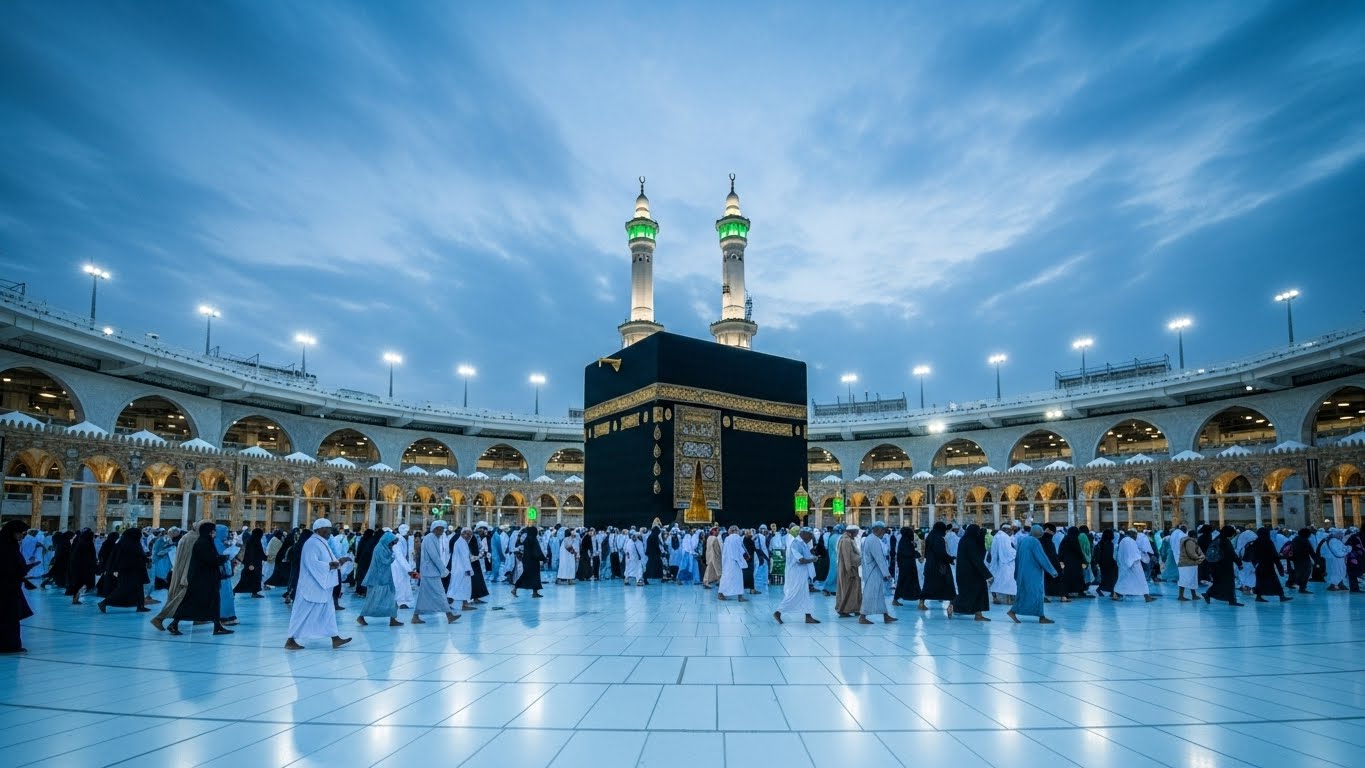
Makkah, located in Saudi Arabia, is the birthplace of Prophet Muhammad ﷺ and the holiest city in Islam. The city houses the Kaaba inside Masjid al-Haram, the focal point for daily prayers and pilgrimages. Millions of pilgrims visit Makkah every year to perform Hajj and Umrah.
The most comfortable months to visit Makkah are November to February, during winter, when temperatures range from 18°C to 28°C. Winter weather makes Tawaf, Sa’i, and Ziyarat more manageable for families, elders, and first-time visitors. Summer months, from May to August, bring extreme heat, increasing dehydration risk and making walking around the Haram difficult.
Crowd density varies by season and Islamic months. Ramadan attracts spiritual seekers, creating a devotional atmosphere with higher hotel and transport demand. Hajj season in Dhul Hijjah sees the largest number of pilgrims. Understanding weather and crowd patterns helps Muslims plan visits for comfort, affordability, and spiritual benefit.
By Seasons
The best time to visit Makkah varies by season. Winter is cool and comfortable, spring is mild, summer is extremely hot, and occasional rainfall occurs. Autumn offers moderate temperatures and manageable crowds, making travel more convenient and pleasant for pilgrims.
Winter (November to February) – Best Overall
Winter in Makkah has temperatures ranging from 18°C (64°F) to 28°C (82°F). Early winter is cooler, while February warms slightly. Rainfall is minimal with an average of 2–3 days per month.
Crowds are moderate compared to Ramadan and Hajj. Winter is ideal for families, elders, and first-time pilgrims. Pilgrims can perform Tawaf, Sa’i, and Ziyarat comfortably with lower heat stress.
Spring (March to April) – Moderate & Pleasant
Spring in Makkah has temperatures ranging from 25°C (77°F) to 32°C (90°F), increasing in April. Humidity is moderate, and rainfall is negligible with zero precipitation days.
Spring is the second busiest period for visitors. Crowds are balanced, providing manageable walking conditions around the Haram. Travelers can enjoy moderate heat, making this season suitable for budget-conscious pilgrims and those seeking comfortable sightseeing and spiritual activities.
Summer (May to August) – Extremely Hot
Summer in Makkah experiences temperatures from 38°C (100°F) to 45°C (113°F), peaking in July. Humidity can be high, and rainfall is almost zero.
Crowd density is moderate but physical strain is high due to extreme heat. Pilgrims require hydration and sun protection. Summer is generally unsuitable for elderly travelers, families, or first-time visitors. Visiting during summer requires careful planning and limited outdoor exposure around the Haram.
Autumn (September to October)
Autumn in Makkah has temperatures ranging from 30°C (86°F) to 37°C (99°F), cooling gradually after summer. Rainfall remains very low with zero to one precipitation day per month. Crowds are moderate, providing manageable conditions for pilgrims.
Autumn is suitable for visitors seeking flexible travel schedules. Pilgrims can perform Tawaf and Sa’i comfortably, with slightly lower heat than summer and moderate crowd density compared to peak seasons.
Best Time to Visit Makkah for Umrah
The best time to visit Mecca for Umrah is during winter months, from November to February, corresponding to the Islamic months of Rabi’ al-Awwal, Rabi’ al-Thani, Jumada al-Ula, and Jumada al-Akhirah. Temperatures range from 18°C (64°F) to 28°C (82°F), making Tawaf, Sa’i, and Ziyarat comfortable for families, elders, and first-time pilgrims. After Hajj season, early Muharram and Safar offer lower hotel prices and manageable crowds.
Umrah is a pilgrimage performed in Makkah that holds immense spiritual significance in Islam. Pilgrims complete Tawaf around the Kaaba, Sa’i between Safa and Marwah, and other rituals, earning spiritual reward. Ramadan provides a highly devotional atmosphere, especially in the first twenty days. The last ten nights of Ramadan are crowded, suitable only for experienced pilgrims.
Hajj Pilgrimage in Makkah
Hajj pilgrimage in Makkah takes place during Dhul Hijjah, from 8th to 12th Dhul Hijjah. Pilgrims perform key rituals including standing at Arafat, Tawaf, and Sa’i around the Kaaba. Temperatures range from 30°C (86°F) to 40°C (104°F), with very little rainfall.
Over 2 million pilgrims fill the mosques, streets, and squares of Makkah, Saudi Arabia. High crowd density makes early booking of flights, hotels, and transportation essential. Pilgrims can also perform Umrah before or after Hajj rituals. The Hajj pilgrimage has immense spiritual significance, offering a once-in-a-lifetime experience.
Proper planning allows safe movement around the Haram, timely completion of rituals, and focus on spiritual devotion. Pilgrims should prepare for high temperatures, crowded streets, and continuous activity in the Haram and surrounding areas.
Ramadan in Makkah
Ramadan in Makkah is very busy, especially in the last ten nights. The first twenty days have smaller crowds, making it easier to move around the Haram. Temperatures range from 28°C (82°F) to 36°C (97°F), and rainfall is low. Pilgrims perform Umrah along with daily prayers and fasting.
During the last ten nights, the mosques and streets in Makkah, Saudi Arabia, are extremely crowded. The atmosphere is very spiritual, with Taraweeh prayers, Quran recitations, and communal Iftar. Pilgrims feel devotion and unity among visitors. Early booking of hotels and transport is important. Visiting Makkah during Ramadan is rewarding, but pilgrims should be ready for high crowd density and continuous activity in the Haram.
Visiting Makkah During Eid
Eid al-Fitr in Makkah occurs immediately after Ramadan ends. Pilgrims perform Umrah alongside daily prayers. Mosques, streets, and the Haram area become very crowded. Hotel rates and transportation costs increase significantly. Pilgrims should book accommodations and taxis in advance. Temperatures range from 28°C (82°F) to 36°C (97°F), with low rainfall. The atmosphere is festive, and spiritual devotion remains high.
Eid al-Adha coincides with the Hajj pilgrimage. Millions of pilgrims gather, making mosques, streets, and squares extremely crowded. Travel for Umrah during this period is challenging. Hotels and transport are fully booked. Pilgrims visiting Makkah during Eid al-Adha must plan carefully and prepare for extreme crowd density, high temperatures, and continuous activity in the Haram area to complete rituals safely and efficiently.
How Hot does it get in Makkah
Makkah gets extremely hot during summer months from May to August, with daytime temperatures reaching 40°C (104°F) to 45°C (113°F). Humidity can be high, making walking around the Haram, streets of Makkah, and nearby areas very difficult.
Pilgrims performing Umrah or Hajj rituals may face dehydration and heat exhaustion. Evening and early morning hours are better for outdoor rituals. Hotels and transport are available year-round, but summer comfort is low.
Elderly pilgrims, families, and first-time visitors may find summer challenging. Cooler months from November to February, with temperatures ranging from 18°C (64°F) to 28°C (82°F), provide safer movement, manageable crowds, and a more comfortable experience. Pilgrims traveling between Makkah and Madinah year-round should plan for seasonal temperatures.
Months to Avoid Visiting Makkah
Pilgrims should avoid visiting Makkah during June to August due to extreme heat. Temperatures often reach 40°C (104°F) to 45°C (113°F), making Tawaf and walking around the Haram difficult. Dehydration and heat exhaustion risks are high.
The last ten nights of Ramadan are also very crowded. Hotels are expensive, and streets and mosques in Makkah, Saudi Arabia, are packed. Umrah and sightseeing become challenging during this period.
Hajj week in Dhul Hijjah is another peak period to avoid for non-Hajj pilgrims. Over 2 million pilgrims gather, causing extreme crowd density. Regular Umrah or sightseeing is difficult. Pilgrims traveling between Makkah and Madinah should plan visits outside these months for safer, more comfortable movement and a better spiritual experience.
Conclusion
Choosing the Best time to visit Makkah ensures comfort, safety, and a meaningful spiritual experience. Winter months, from November to February, offer moderate temperatures, manageable crowds, and easier access to the Haram for Tawaf, Sa’i, and Ziyarat.
Summer months, from May to August, bring extreme heat and higher dehydration risk. Ramadan provides a spiritual atmosphere, while the last ten nights are extremely crowded. Hajj in Dhul Hijjah attracts millions of pilgrims, requiring careful planning and early bookings.
Pilgrims planning to visit Makkah can use Alfalah Journey’s private taxi services for safe, comfortable, and reliable transport within the city and to nearby areas. Proper planning of travel, accommodation, and transport allows pilgrims to focus on rituals and fully benefit spiritually from their journey.









Post Comment